GO
An ancient game of the Samurai. A deep strategy game of territorial conquest.
GO
A deep strategy game of territorial conquest
SET UP
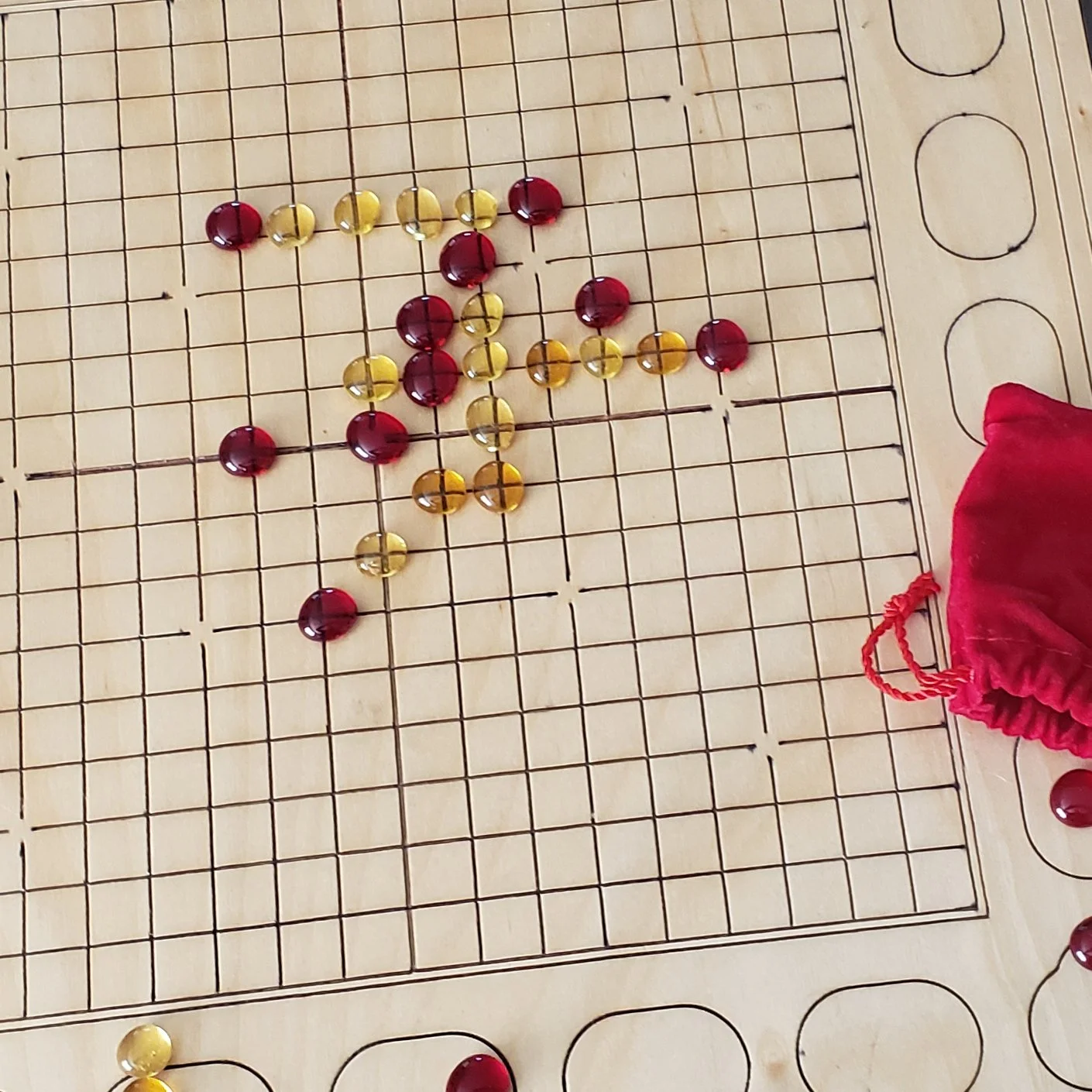
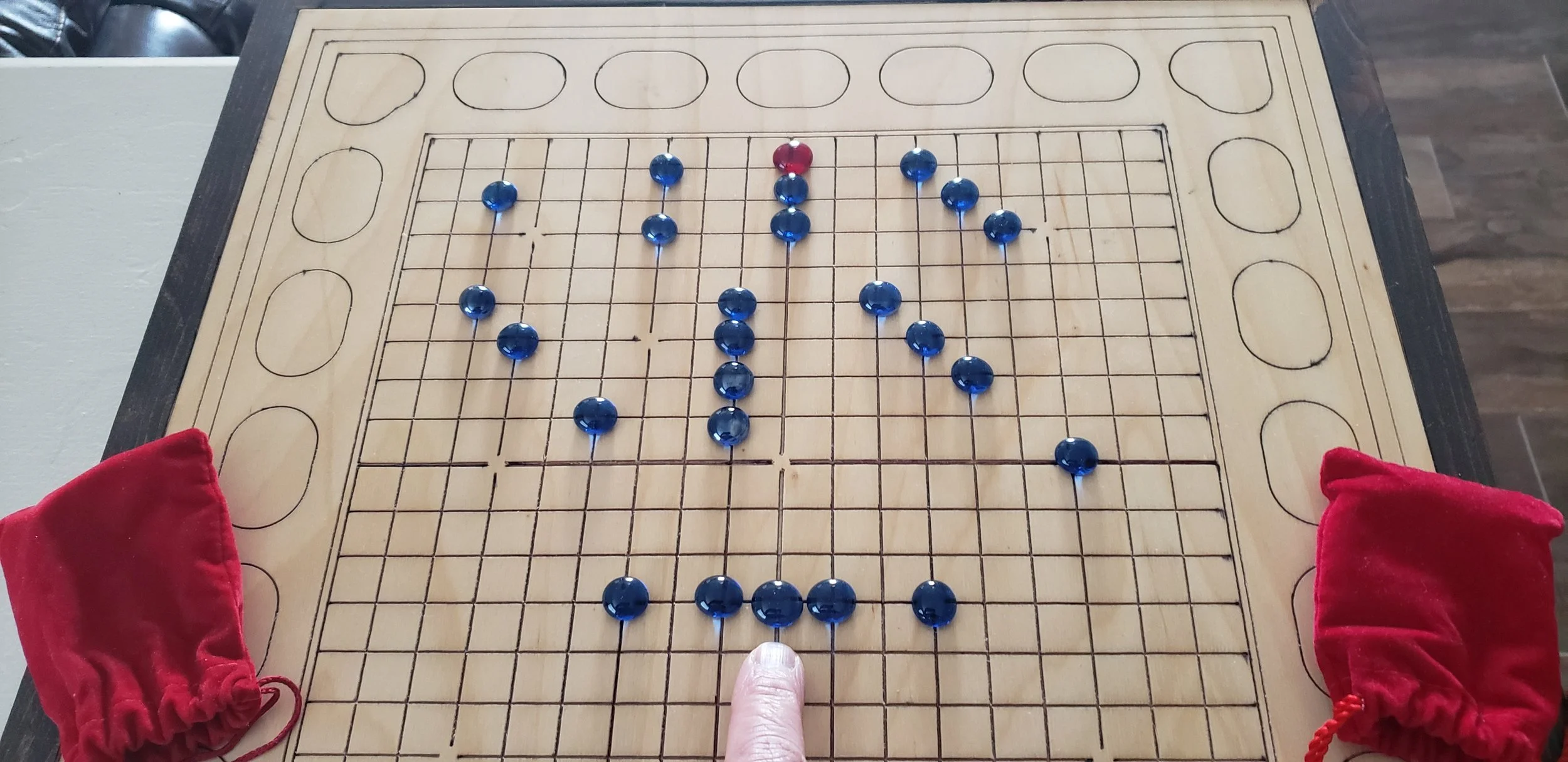
Played on a 19x19 square board with a grid of intersecting lines, called a Goban. (most common size: 19×19, but smaller boards like 9×9 or 13×13 are also used).
Two players: one uses black stones, the other white stones.
Stones are placed on the intersections (not inside squares).
Black moves first.
Number of Players
2
Objective
Control more territory on the board than your opponent by the end of the game.
Territory = empty intersections surrounded by your stones.
Capturing opponent’s stones also contributes to your score.
Rules
Players take turns placing one stone on an empty intersection.
Stones do not move once placed.
Stones are captured and removed if they have no empty adjacent intersections (called liberties).
You cannot make a move that would immediately recreate a previous board position (Ko rule).
The game ends when both players pass consecutively (usually when no profitable moves remain).
Score = controlled territory + captured stones.
Capturing in Go is all about removing your opponent’s stones when they lose all their liberties (empty adjacent intersections).
1. What Are Liberties?
Every stone on the board has liberties—empty points directly next to it (up, down, left, right).
A single stone has up to 4 liberties if placed in the center of the board.
2. How Stones Lose Liberties
When you place stones around an opponent’s stone, you reduce its liberties.
If all liberties are filled by your stones, that stone (or group) is captured.
3. Capturing a Group
Stones that are connected horizontally or vertically share liberties.
To capture a group, you must fill all liberties of the entire group.
4. Removing Captured Stones
Once a group has zero liberties, remove all those stones from the board.
Each captured stone counts toward your score.
Player Variations
N/A
History
Originated in China over 4,000 years ago, making it one of the oldest board games still played.
Spread to Japan and Korea, where it became highly refined and competitive.
Known for its simple rules but deep strategy—often considered more complex than chess.
Professional Go competitions and AI breakthroughs (like AlphaGo) have made it globally famous.
Game Theory / Game Dynamics
This game is so deep I can barely explain the simple complexity of it. It is one for the ages for a reason.
This game will blow your mind. Just when you think you have an advantage of capturing small islands, your opponent can make a move that thinks in capturing continents. And just when you think you got a handle on it, a move is made that conquers worlds.
I hope you enjoy playing games,
as much as I have making them.
Thank you for visiting